
By Sulayman “Sully” Lyons, CSZ-SCZ Blog Editor & PhD Student, McMaster University
It’s been just over a month since we had the virtual CSZ conference (CSZ Online 2021, May 17 to 21). In case you’re missing the amazing week we had, here’s a quick spotlight of some of our W.S. Hoar Award and Presidents’ Award winners and finalists!
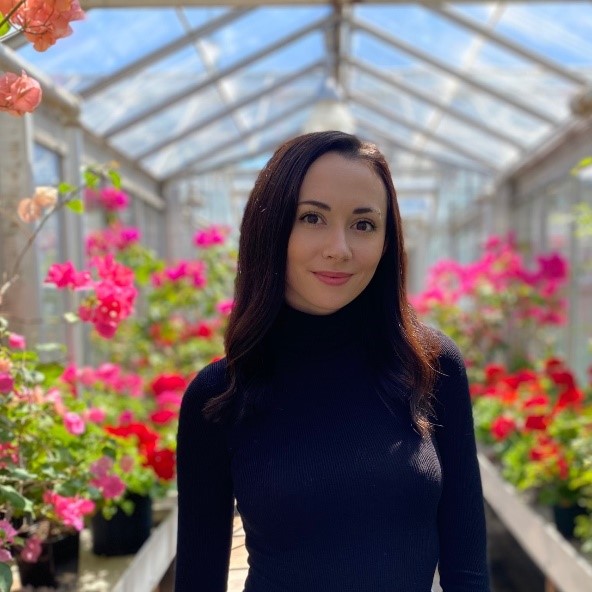
Carlie Muir, W.S. Hoar Award Winner
CSZ-SCZ Blog: Where did you complete the research presented? Under whose supervision?
CM: Western University, under the supervision of Bryan Neff and Sashko Damjanovski.
What’s your current lab/work position? Under whose supervision?
Currently wrapping up my PhD at Western with Bryan and Sash!
Tell us a little bit about the research presented and its importance or relevance.
In recent years, anomalously high temperatures have resulted in mass mortality events among temperate salmonids. This temperature-induced mortality is thought to be caused, in part, by a deterioration of cardiac function. In my research, I assessed the capacity for developmental plasticity in the thermal performance of juvenile Atlantic salmon, and investigated mechanistic underpinnings in heart morphology and function.
What’s something you like to do outside of research?
I spend my winters playing board games, and my summers playing golf!
What’s your favourite go to restaurant?
Quynh Nhi, a family-owned Vietnamese restaurant here in London, ON.
Dr. Brittney Borowiec, Presidents’ Award Winner

CSZ-SCZ Blog: Where did you complete the research presented? Under whose supervision?
BGB: Wilfrid Laurier University, co-supervised by Allison McDonald and Mike Wilkie
What’s your current lab/work position? Under whose supervision?
Postdoctoral fellow, co-supervised by Allison McDonald and Mike Wilkie
Tell us a little bit about the research presented and its importance or relevance.
Sea lamprey are a big problem in the Great Lakes, and one of the tools that we use manage their populations is lamprey-specific pesticides (lampricides). I characterized how these chemicals affect sea lamprey mitochondria, showing that lampricides make the mitochondria so inefficient that they are almost useless to the animal. We already knew this was true for one lampricide, TFM, but my study is the first to show that it is also true for the other lampricide, niclosamide, and a mixture of TFM and niclosamide. Hopefully the more we learn about how these pesticides work, the better we can deploy them to keep the Great Lakes healthy and sea lamprey free!
What’s something you like to do outside of research?
I’m a science writer and editor! I wear a few different hats, some of which are being the Managing Editor at CSZ-SCZ Blog (pitch us!), writing the Crash Course: Zoology series on YouTube, and being an Editor at Massive Science.
What’s your favourite go to restaurant?
Ohhhh…. South China Chinese, the place with the yellow sign just across from the hospital at Mac. So many late night and early morning experiments fueled by Combo D!
Susan Procopio, W.S. Hoar Award Finalist

CSZ-SCZ Blog: Where did you complete the research presented? Under whose supervision?
SP: I completed the research presented at the University of Guelph under the co-supervision of Dr. Beren Robinson and Dr. Frédéric Laberge.
What’s your current lab/work position? Under whose supervision?
My current position as an MSc student remains at the University of Guelph under the supervision of Dr. Beren Robinson, with Dr. Frédéric Laberge and Dr. Andy Turko as my committee members.
Tell us a little bit about the research presented and its importance or relevance.
My research evaluated whether the relative heart size of pumpkinseed sunfish (Lepomis gibbosus) varies across seasons and whether such heart plasticity can evolve under contrasting seasonal regimes. This research found novel evidence of seasonal heart plasticity under natural conditions and in this species of sunfish. Furthermore, these findings demonstrate that seasonal heart plasticity can diverge within 50 generations, raising questions about the effects of global climate change on the evolution of heart plasticity in ectothermic fish.
What’s something you like to do outside of research?
Outside of research, I enjoy water-related activities such as swimming, paddle boarding and surfing, whether off the coast of Hawaii or on the beautiful Great Lakes.
What’s your favourite go to restaurant?
My favorite go to restaurant is an Italian restaurant located outside of Toronto named “Sapore” meaning “flavor” in English. I especially enjoy their grilled calamari and tiramisu.
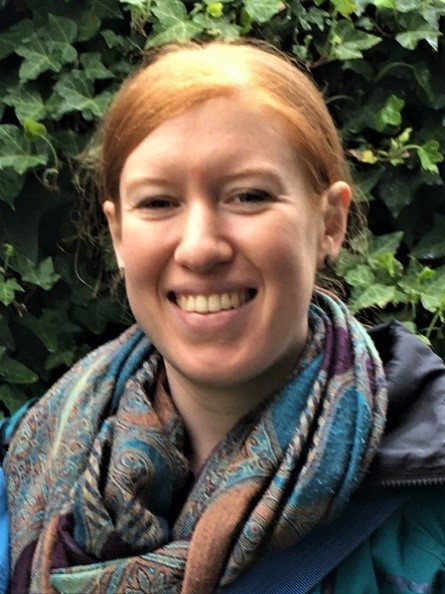
Naomi Pleizier, W.S. Hoar Award Finalist
CSZ-SCZ Blog: Where did you complete the research presented? Under whose supervision?
NP: I completed this research in the Zoology department at the University of British Columbia under the supervision of Dr. Colin Brauner.
What’s your current lab/work position? Under whose supervision?
I am currently a PhD candidate in Dr. Colin Brauner’s lab.
Tell us a little bit about the research presented and its importance or relevance.
I presented my research on the effects of air supersaturation on fish. Dams can cause rivers to become supersaturated with air, much like your soda is supersaturated with carbon dioxide, and this can cause harmful bubbles to form in the tissues of aquatic animals. I wanted to know how environmental factors and swimming behaviour affected the progression of this condition, as well as whether fish can avoid air supersaturation. My results will help us understand how dams affect fish health and potentially help us develop strategies for reducing harmful effects on fish.
What’s something you like to do outside of research?
We really got into gardening during the past few years; there are so many plants on the balcony that there’s hardly any room for us!
What’s your favourite go to restaurant?
Ginger Sushi on Commercial Drive!
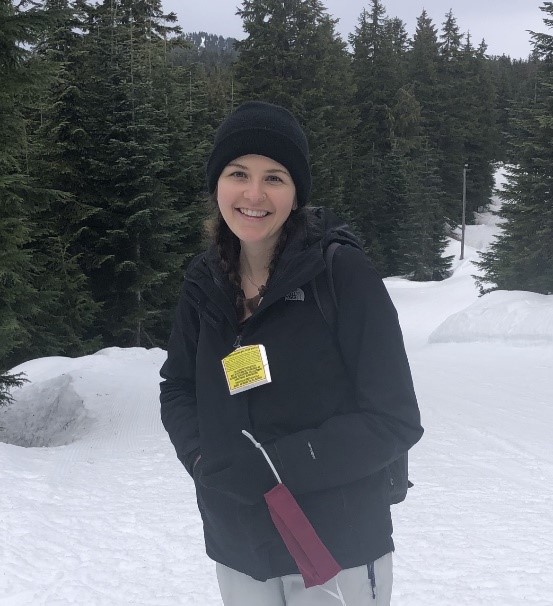
Jess Kennedy, W.S. Hoar Award Finalist
CSZ-SCZ Blog: Where did you complete the research presented? Under whose supervision?
JK: I completed my research at the University of British Columbia, Vancouver campus, as an undergraduate Honours student with Dr. Katie Marshall, with lots of help and support from Dr. Chris Harley.
What’s your current lab/work position? Under whose supervision?
Currently, I just finished the first year of my Masters at UBC Vancouver and am co-supervised by Dr. Katie Marshall and Dr. Chris Harley.
Tell us a little bit about the research presented and its importance or relevance.
Some intertidal invertebrate species such as barnacles, mussels and intertidal snails are able to survive freezing, which is a remarkable feat considering how physiologically stressful freezing is. Currently, we know very little about how these organisms are able to survive such an extreme stress, and I hope to address this knowledge gap with my research. In my project, we used a common intertidal mussel species, Mytilus trossulus, as our model organism and we found that mussels were more freeze tolerant in the winter, with increasing intertidal shore height, and after being acclimated to high salinity sea water. We also found that the gill tissue concentrations of osmolytes increased in correlation with this increased freeze tolerance, indicating that osmolytes may be cryoprotective and help mussels to survive freezing.
What’s something you like to do outside of research?
I really like reading fiction books and listening to podcasts and audiobooks! I’ve also taken up embroidery as a hobby in these COVID-times.
What’s your favourite go to restaurant?
My favourite restaurant is definitely “The Naam” in Vancouver.
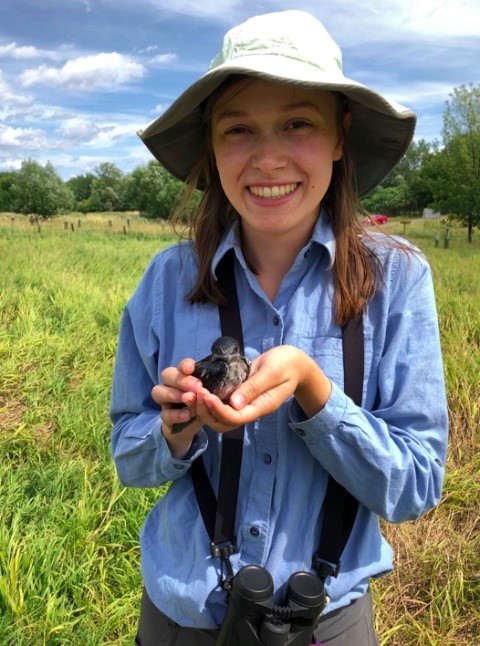
Kristen Lalla, W.S. Hoar Award Finalist
CSZ-SCZ Blog: Where did you complete the research presented? Under whose supervision?
KL: I presented one of my master’s thesis chapters at the CSZ conference. My master’s is in progress at McGill University under the supervision of Dr. Kyle Elliott in the Department of Natural Resource Sciences.
What’s your current lab/work position? Under whose supervision?
I am currently finishing my thesis at McGill University under the supervision of Dr. Kyle Elliott. (same as above)
Tell us a little bit about the research presented and its importance or relevance.
We deployed tiny GPS units on purple martins, a declining species of swallow well-known for breeding in artificial nest boxes, to capture chick-rearing and overwintering foraging behaviour. We found that non-breeding purple martins have larger foraging ranges than chick-rearing birds, likely because they are less constrained, i.e., they don’t have nestlings to feed. Across the locations we studied, purple martins selected freshwater habitats for foraging. Our study is the first to quantify foraging behaviour for purple martins using biologging. Their foraging habitat preferences, coupled with diet studies showing that purple martins eat many species of insects with aquatic stages, suggests that preserving wetland, lake, and river habitat is important for the conservation of this species.
What’s something you like to do outside of research?
Outside of research, you can often find me birdwatching, gardening, or baking.
What’s your favourite go to restaurant?
I love getting Indian takeout. There’s a really good place in Sainte-Anne-de-Bellevue, which is near Macdonald campus of McGill University.
Keegan Lutek, W.S. Hoar Award Finalist

CSZ-SCZ Blog: Where did you complete the research presented? Under whose supervision?
KL: I completed the research presented at the University of Ottawa under the supervision of Emily Standen.
What’s your current lab/work position? Under whose supervision?
I’m currently a PhD student in Emily Standen’s lab.
Tell us a little bit about the research presented and its importance or relevance.
The research I presented uses Polypterus senegalus, a predominantly aquatic fish that can walk on land, to investigate how animals that live in water might take their first steps on land. I found that swimming and walking in this species are based on similar patterns of muscle activity and that fish raised on land for several months change their muscle activity pattern to achieve more effective walking. These observations in Polypterus, a member of the sister group to the tetrapod lineage, demonstrates that two changes necessary for the evolution of terrestrial tetrapods – moving on land and getting better at moving on land – may have been within the muscle activity repertoire of the first fishes to step out of the water.
What’s something you like to do outside of research?
I love going for hikes with my dog, Ella, especially when we can find a river or lake for us to swim in.
What’s your favourite go to restaurant?
I’m one of those people who would rather cook at home than go out to a restaurant. I make a pretty tasty steak frites and Caesar salad.
Megan Ridgway, W.S. Hoar Award Finalist
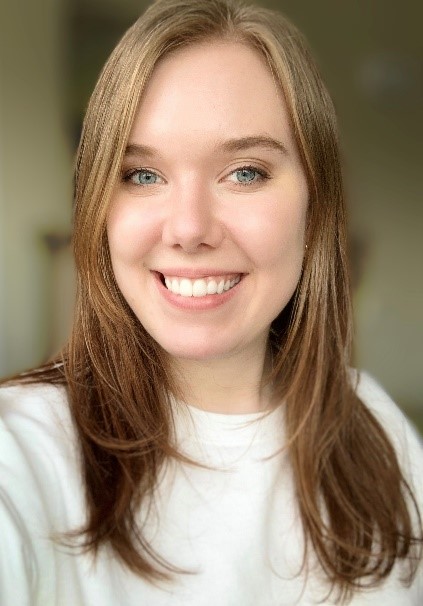
CSZ-SCZ Blog: Where did you complete the research presented? Under whose supervision?
MR: This research was completed at the University of Guelph during my undergraduate thesis project under the supervision of Pat Wright.
What’s your current lab/work position? Under whose supervision?
I am currently a master’s student at McMaster University under the supervision of Graham Scott.
Tell us a little bit about the research presented and its importance or relevance.
In this project, I showed that K. marmoratus have a remarkable capacity for phenotypic flexibility, shifting key gill functions to the skin when out of water. I also discovered that skin remodeling was regulated by the glucocorticoid hormone, cortisol. The role of cortisol in fish osmoregulation through changes in the gill and intestine is well documented, but my study adds to our understanding by providing the first observation in the endocrine regulation of skin ionocyte remodeling as a result of air-exposure in an amphibious fish. This expands our current knowledge of extrabranchial ion exchange sites and the rapid physiological changes that K. marmoratus has the capacity to undergo in response to challenging environments.
What’s something you like to do outside of research?
During quarantine I took up crocheting and haven’t stopped since. My apartment is full of yarn.
What’s your favourite go to restaurant?
Pho Excellent 🙂
Dr. Lauren Todd, Presidents’ Award Finalist

CSZ-SCZ Blog: Where did you complete the research presented? Under whose supervision?
LT: I completed the research I presented at CSZ2021 at the University of Waterloo under the supervision of Dr. Barbara Katzenback.
What’s your current lab/work position? Under whose supervision?
I am currently an NSERC Postdoctoral Fellow in Dr. Barbara Katzenback’s lab at the University of Waterloo.
Tell us a little bit about the research presented and its importance or relevance.
My research seeks to uncover the functions of non-coding RNAs in host-pathogen interactions. The project I presented at CSZ2021 focused on identifying frog microRNAs that mediate antiviral responses. We profiled changes in microRNA expression in Xenopus laevis (African clawed frog) skin epithelial cells in response to viral infection (frog virus 3 or the viral nucleic acid analog poly(I:C)), and uncovered numerous differentially expressed microRNAs that target key genes involved in innate antiviral immunity. This study is the first to suggest that frog microRNAs mediate immunity, furthers our understanding of host-pathogen interactions in frogs, and underscores the importance of skin as an immune organ.
What’s something you like to do outside of research?
Outside of my research I am a wildlife photographer (@blonde_biologist on Instagram) and volunteer wildlife rehabilitator!
What’s your favourite go to restaurant?
My favourite restaurant is anywhere with great burritos or tacos on the menu.
Congratulations to all our finalists and award winners! We can’t wait to see where your research takes you next.