By Brittney G. Borowiec, CSZ-SCZ Blog Managing Editor & PDF, Wilfrid Laurier University
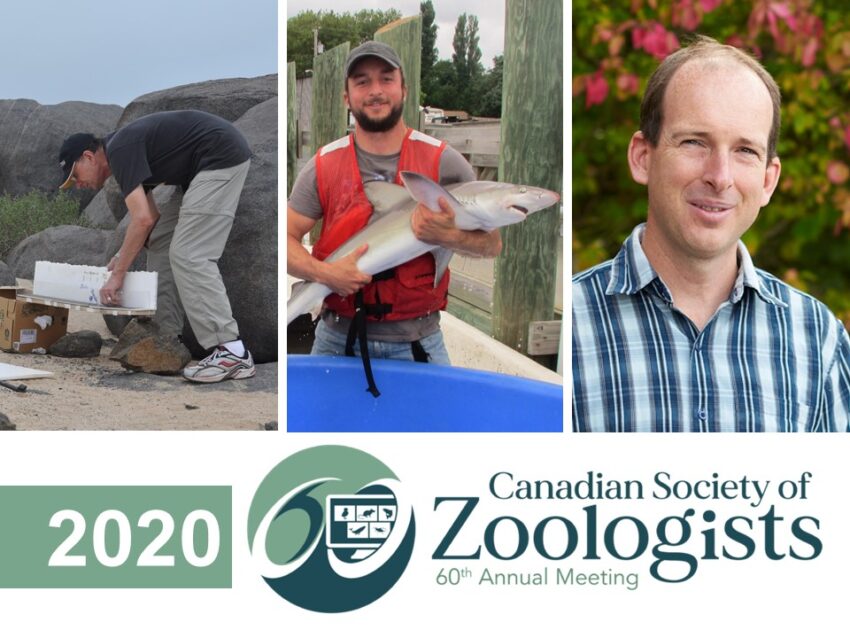
One of the best parts of the CSZ-SCZ annual meetings is attending the “big three” plenary seminars, where some of the leading scientists in our society talk about their work and their personal journeys. The Blog connected (virtually!) with the 2020 awardees to chat about their research and experience in CSZ. We also challenged them to pick one – just one – favourite animal!
Dr. Anthony P. Russell, 2020 Fry Award
The F. E. J. Fry Medal is given to a Canadian Zoologist who has made an outstanding contribution to knowledge and understanding of an area in zoology. The 2020 medalist is Dr. Anthony P. Russell from the University of Calgary.

CSZ-SCZ Blog: What is your research about?
APR: My research focuses on form and function in an evolutionary context. The organisms upon which I base the majority of my research questions are geckos (although I have published quite extensively on mammals, dinosaurs and occasionally on birds, amphibians and fishes). Geckos are widespread throughout the (warmer parts) of the world and show a great deal of diversity (six families and about 1700 species). Geckos do all sorts of cool things, but what they are known best for is their adhesive toes and their uncanny ability to stick to surfaces and move easily in body orientations (such as upside down on ceilings when they enter houses). These properties make them excellent study subjects for such topics as convergent evolution, biomechanics, functional morphology, and biomimicry. I have conducted research in all of these areas and the diversity and biogeography of geckos means that there is always something new and fascinating to investigate. They also give me the opportunity to travel (when it is safe to do so) to exciting field locations in various parts of the world to study them in their natural habitats.
What’s your favourite part about CSZ? Do you have a story you’d like to share?
The CSZ has provided me, throughout my career, with a friendly and welcoming “home” in Canada to meet colleagues and learn about the exciting and innovative research being conducted across the country. The annual meetings are big enough to be diverse and exciting, and small enough to ensure that nobody feels anonymous. The CSZ and its meetings have been of great importance to my graduate students, providing them with a supportive and nurturing environment in which to learn the art of making presentations and having the opportunity to network with other students and with principal investigators whose labs they might join in the future.
I have served as an officer of the society and was thrilled to serve a term as President [2006 to 2007]. During my time on the Executive I was able to participate in lobbying efforts on Parliament Hill and other parts of Ottawa. These were very intense but instructive times and they gave me a better insight into the relationship between federal politics and science. One lasting memory that I have was a meeting with the Deputy Prime Minister (of the day — quite a few years ago now) — what really sticks in my mind was the stuffed and mounted beaver sitting in the (now non-functional) fireplace in that office. There seemed to be something very Canadian about that.
What advice would you like to give to early career researchers hoping to one day win the Fry medal?
I guess my advice would be to follow the pathway that you are really passionate about. You never know where that might lead, but you know that you will be calling the shots. When faced with questions like this I always think back to when I began my PhD program. I think that there were about ten new PhD candidates (including me) who began their studies in that department that year. All of them (except possibly me) were very bright but, as far as I could tell, all but me had been convinced (on the basis of their previous academic performance and their general areas of interest) to follow a set of research questions that had been laid out by someone else. They all completed their program successfully, but as their programs progressed, they realized that the pathway that they were following was not what actually drove them.
I was lucky enough to be able to design my own set of questions and the more I learned the more deeply invested I became. I was the only one of that entry cohort to continue in an academic career. So, my advice would be to make sure that you are passionate about what you are doing and follow the pathway that allows you to remain interested and engaged for the many years that hopefully your career will last. Of course, you need opportunities for positions to arise, but that is beyond your control.
What’s your favourite animal and why?
I guess it would have to be the Tokay gecko (Gekko gecko) — a feisty, bad tempered and aggressive species that is generally unpleasant to work with. It has, however, been the vehicle that has allowed me to ask and answer a whole raft of fascinating questions. So, I forgive it for its surly nature (and for the many chunks it has taken out of my fingers) and admire it as an instructor.
Anything else you’d like me us know?
I think that being a first-generation university attendee in my family made a great difference to my development as an academic. I was fortunate to have parents who, while they never really understood what interested me, encouraged me to follow whatever that might be (without any assurance that it was going to lead anywhere at all).
Dr. Kyle H. Elliott, 2020 Boutilier Award
The Robert G. Boutilier New Investigator Award is awarded to a “rising star” in zoology, who has made significant contributions to the field within seven years of receiving their first academic or professional appointment. The 2020 awardee is Kyle H. Elliott from McGill University.

CSZ-SCZ Blog: What is your research about?
KHE: Movement is a fundamental feature of all organisms, and plays a key role in determining fitness. How an organism moves will often determine its fate. Classically studied through biomechanical, cognitive or optimality lenses, there is growing awareness of the need for a general theory of organism movement. Energetics provides a framework for unifying these themes. The integration of sensors that record both fine-scale movement and energetics provides the possibility of testing that framework on wild animals. By studying seabirds that move in all three media (air, land, and water), I study how energetics can illuminate the linkages between biomechanics (flight kinematics), cognition (personality) and optimal foraging (decision-making), and link those facets with fitness. I am particularly interested in how movement patterns can vary throughout an animal’s lifespan, and how the efficiency of those patterns can determine lifetime reproductive success. Critical to understanding the link between movement, energetics and fitness has been my ability to access long-term, longitudinal studies that record movement patterns over scales relevant to lifespans; such long-term studies are essential to ecology in the 21st century.
What’s your favourite part about CSZ? Do you have a story you’d like to share?
The diversity of different talks and topics. It’s certainly the broadest conference I go to, and I enjoy hearing stories about mind-altering parasites, the phylogeny of sponges, and acid-base regulation of elasmobranchs all in one session–as I once did at the CSZ.
What advice would you like to give to early career researchers hoping to one day win the Boutilier award?
Find great people that give you energy, and work with them. Science is a social activity!
What’s your favourite animal and why?
It’s Father’s Day [today, when I’m answering these questions,] so I’ll go with the thick-billed murre. After three weeks on a cliff edge, fathers encourage their offspring to jump 500 m down to the ocean below, and then look after them, alone, for the next few weeks on the high seas, diving 100+ meters deep hundreds of time per day to nourish them. In the meantime, the female parties back at the colony, entertaining paramours. Seems apt for Father’s Day.
Dr. Till S. Harter, 2020 Cameron Award
The T. W. M. Cameron Outstanding Ph.D. Thesis Award recognizes the author of an outstanding PhD thesis in zoology submitted to a Canadian University. The 2020 awardee is Dr. Till Harter, currently a postdoctoral fellow at Scripps Institution of Oceanography (University of California, San Diego)
CSZ-SCZ Blog: What is your research about?
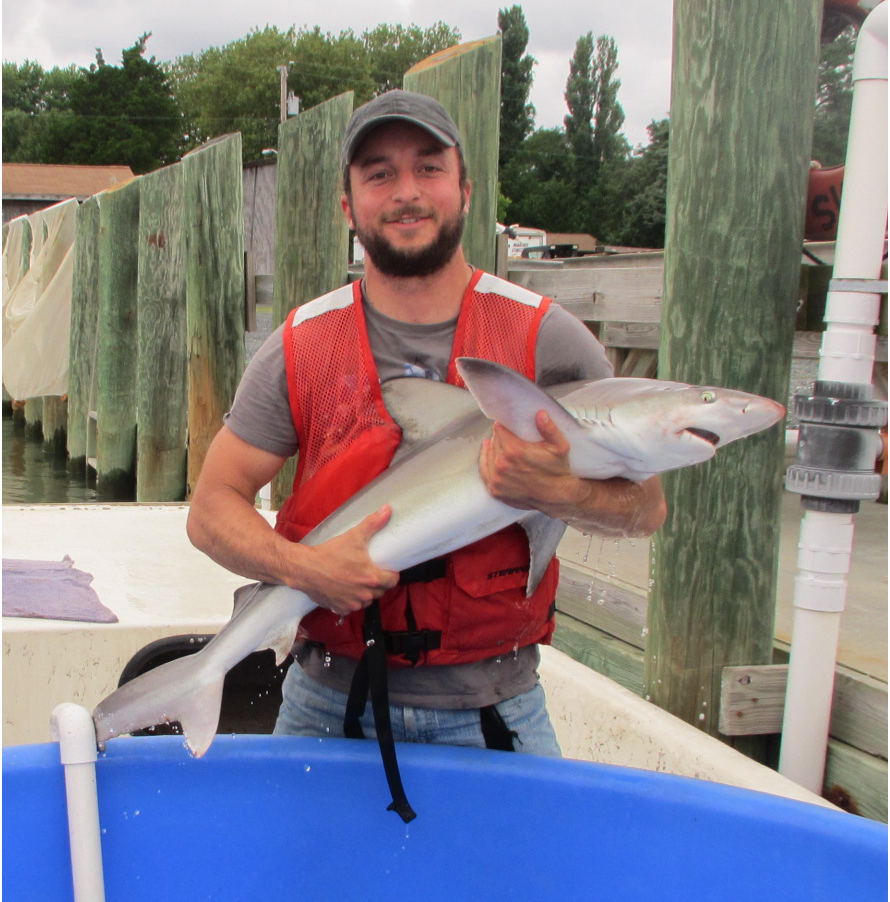
TSH: I study how animals transport gases in their blood (both oxygen and carbon dioxide) and how their red blood cells facilitate this process. My current work as a postdoc at the Scripps Institution of Oceanography investigates cellular mechanisms of pH sensing within the red blood cells of vertebrates and specifically the role of soluble adenylyl cyclase (sAC) as a putative, novel pH sensor. So far, we’ve been able to find sAC in the red blood cells of all vertebrates that we’ve looked at, from hagfish and white seabass, to humans and elephant seals (I get many of my blood samples from SeaWorld in San Diego). Currently, I’m working on finding out what sAC is doing within these red blood cells and how it might affect the transport of gases in the blood and ultimately whole-animal homeostasis. Stay tuned!
What’s your favourite part about CSZ? Do you have a story you’d like to share?
My first and best conference experiences were all at CSZ meetings. In fact, the first scientific conference that I attended during my PhD was the CSZ meeting in Guelph in 2013. That year, Erika Eliason (who won the Boutilier Award this year) had won the Cameron award for her PhD work. I remember vividly, the amazing talk that she gave that year and how impressed I was by her work on Pacific salmon and their struggle with warming rivers. I thought about this many times when I prepared my own Cameron lecture this year, and how it’s both an honor and very daunting to join the ranks with the likes of Erika.
What advice would you like to give to grad students hoping to one day win the Cameron award?
I’m not sure I’m in a position to give advice on this, as I had no expectations about receiving the Cameron Award myself, until I heard from the selection committee. In fact, I don’t think receiving any one of these awards is something that one can really plan for. The only prerequisite is putting in the years of hard work, as most of us do (there are just no short cuts in science), and then maybe having a little bit of luck as well. Point in case, while my PhD work had the usual ups and downs, I’ve largely spent my postdoc years scratching my head over fruitless experiments. C’est la vie!
What’s your favourite animal and why?
This is a tricky question, because I have many. But as a fish guy, I’d probably have to say boxfish or cowfish are my favourite animals. They really look more like a caricature of a fish, drawn by a three-year old: little, hard-shelled, submersibles with tiny fins that move them around, and then they have horns on their head, too!
Congratulations to all our “big three” award winners! We can’t wait to see where your research takes you next.