By: Alyssa Weinrauch, CSZ-SCZ Blog Editor & PDF, University of Manitoba
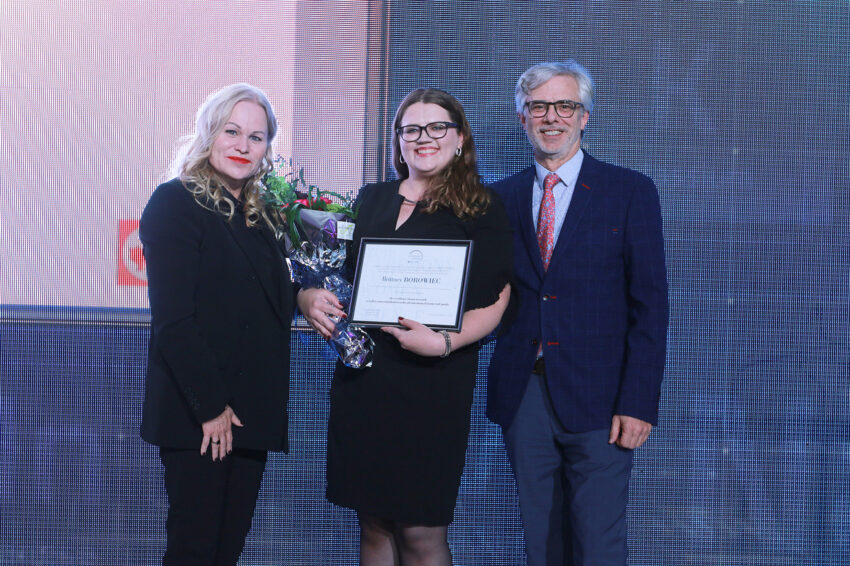
What better way to start our third year of blogging than with an interview with CSZ-SCZ family member, Dr. Brittney Borowiec, who received the prestigious L’Oréal-UNESCO for Women in Science Award in November 2022. This award recognizes outstanding women in STEM who demonstrate “exemplary involvement in science promotion, mentorship, and leadership.” These requirements no doubt describe Dr. Borowiec, who is likely a familiar face and “voice” for the members of CSZ-SCZ. She is a founding member and managing editor of the CSZ-SCZ Blog and contributor extraordinaire to all things CSZ-SCZ, including being the Presidents’ Award winner in 2021.
Here, Brittney discusses her academic experiences, positive female mentors, and provides expert advice for those interested in pursuing science communication! Congrats to Dr. Borowiec for her achievements!
Alyssa Weinrauch (CSZ-SCZ Blog): Can you describe your path through zoology and what you’re currently researching?
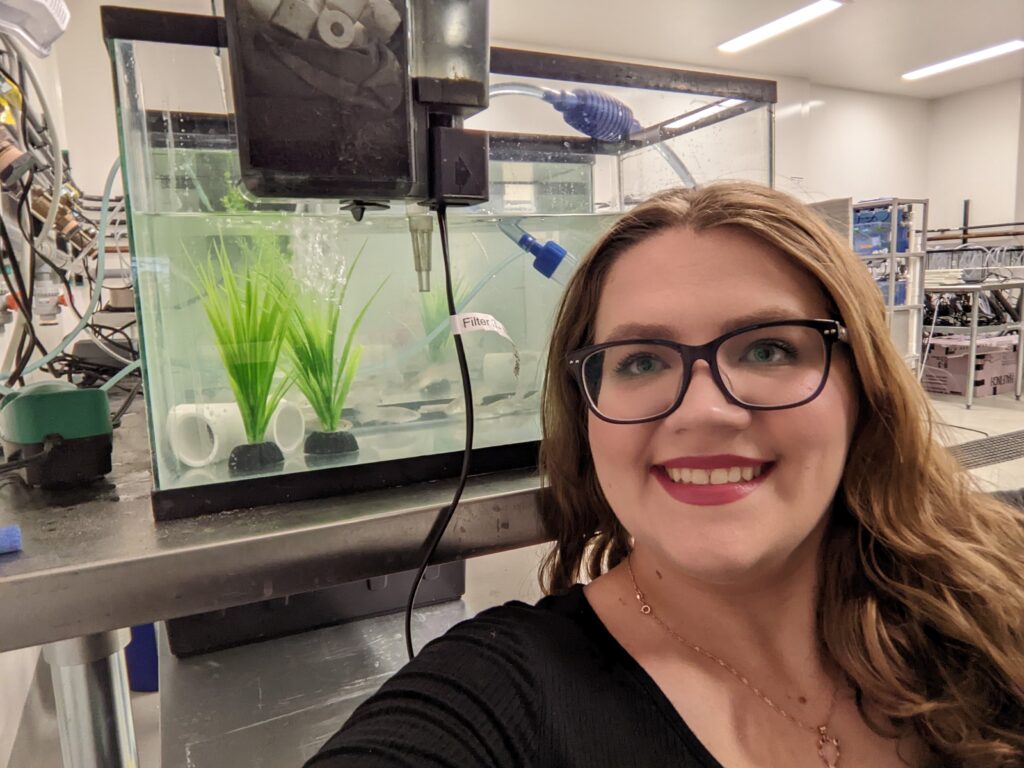
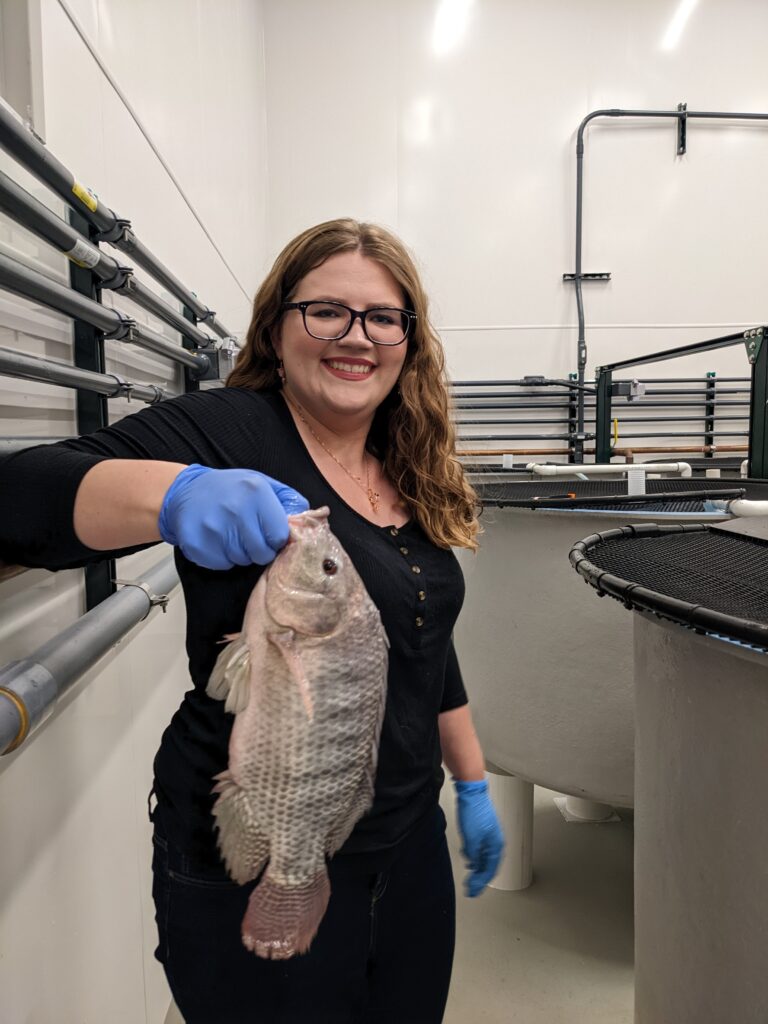
Brittney Borowiec (BG): Other than thinking animals are cool (like most kids!), things didn’t get going until I started my undergraduate degree in biology at McMaster University. I started volunteering in Graham Scott’s lab not long after he’d started there as a new professor. I stayed on there until I got my PhD with a project about how daily fluctuations in oxygen level altered the physiology of estuarine killifish. Just before COVID-19 hit, I started my first PDF at Wilfrid Laurier University with Mike Wilkie and Allison McDonald looking at how lamprey pesticides damaged their mitochondria. Now, I’m working with Paul Craig at the University of Waterloo, going back to how fluctuations in oxygen level impact fish, but this time with a molecular twist.
CSZ-SCZ Blog: What does winning the L’Oréal Women in Science Award mean to you?
BG: It’s a big honour and was a big surprise – I usually don’t win prestigious awards like this. The biggest impact to me, other than the extra bit of funding, is that it is a nice signal that I’m on doing something right. I hope I can use it to be a good role model for future (and current!) women in science.
CSZ-SCZ Blog: Do you have any tips for future researchers:
…as a woman in STEM?
BG: This is a hard question because there are there are a lot of things about STEM that make it a difficult place to be for women, and anyone else who doesn’t fit the historical stereotype of what a scientist looks, does, or acts like.
So, I’ll focus on a little bit of practical advice: we need to build each other up and nominate each other (and ourselves!) for awards, grants, and other CV-building things. I have the L’Oréal now, but there are lots of examples that I can think of where I didn’t apply for something because I never thought I was competitive, and no one gave me a nudge to try. It is really easy to fall into the “I’m not good enough” line of thinking when you already feel a bit out of place. I want women and other “non-stereotypical” scientists to recognize it when it is happening to them and to go for it anyway.
CSZ-SCZ Blog: …Or interested in becoming involved in science communication?
BG: I do talks on this, so I have lots of ideas. I’ll focus on the big one here though: you’ll need practice and ideally some training to develop your science communication skills, since they’re not taught very well in most graduate programs (with the exception of how to communicate with other scientists).
In some cases, your specialized training and knowledge can make it harder for you. So don’t get discouraged if it’s difficult in the beginning, you’re teaching your brain to think about science in a very different way than you are used to.
In terms of what this looks like in practice, at least for my specialty of science writing, it means volunteering to write things, pitching outlets that are friendly to new writers (like CSZ-SCZ Blog), and even emailing people you think are doing cool stuff for leads.
CSZ-SCZ Blog: Have you had any significant “Women in STEM” mentors? What made them especially great?
BG: Two big ones for me are Sigal Balshine, who I’ve known since my time at McMaster, and Allison McDonald, who co-supervised my PDF at Laurier. They are two very different people with very different approaches to how they teach, run their labs, and mentor, and I’ve learned a lot from both of them.
I also think about other women who have never technically been mentors to me, but who I’ve looked up to from afar who are absolutely forces to be reckoned with.
But the people I think of most are my peers. The ones I go out for drinks with at conferences, who put up with my late-night ranting sessions over text, the ones who pass on information over the whisper network… those are the people who had the biggest impact on me as a woman in STEM.
CSZ-SCZ Blog: You are well known as a science communication expert.
Indeed I am, though it is still weird to see it in print.
CSZ-SCZ Blog: How did that all start for you?
BG: I started and still think of myself largely as a writer. While in graduate school I volunteered for some blogs like Oceanbites. That connection led to Massive Science first as a writer and eventually as an Editor. Since then, things sort of snowballed, and now my portfolio includes all sorts of articles, video scripts, and even some children’s books.
CSZ-SCZ Blog: What type of piece is your favourite to create?
BG: My favourite is still the standard research news/research translation type piece where in 600 to 800 words or so, you cover why a new study is cool and important, and maybe get some good quotes from an author or two. It’s a straightforward, quick hit of science journalism, so I get to learn a little bit about a lot of different things.
CSZ-SCZ Blog: Are there any venues you’re hoping to publish in?
BG: Lots, but I’d rather not name names. 😉
Images provided courtesy of the L’Oréal Foundation and Brittney Borowiec.