
By: Alyssa Weinrauch, CSZ-SCZ Blog Editor & PDF, University of Manitoba
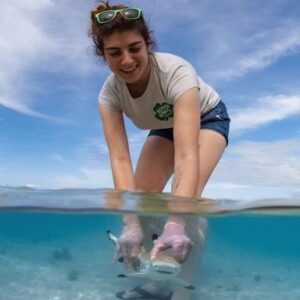
Alex Schoen is a PhD student at the University of Manitoba studying shark metabolism under Dr. Gary Anderson. She is the founder of the modern_womenofstem social media pages that are aimed at “celebrating amazing women in STEM, at every point in their careers, that are changing our world!” Alex was also just elected as our incoming student councillor for 2021! We talked to Alex about her research, founding an inclusive social media page for scientists and her involvement with CSZ. This interview has been edited for length and clarity with approval from Alex Schoen.
Alyssa Weinrauch (CSZ-SCZ Blog): What do you study?
Alex Schoen: I study the hormonal influence on energy mobilization in elasmobranchs. Specifically looking at the pathways of energy mobilization and how they are affected by corticosteroids. I focus on periods of increased energy demand, such as during stress, but I’m also trying to diversify into broad energy mobilization like after insulin or glucagon application. I primarily focus on the liver as an energy storage organ because elasmobranchs produce a lot of energy metabolites in the liver.
AW: Tell me about your outreach project for women in STEM.
AS: It’s a social media page called modern_womenofstem that is supposed to highlight women in STEM you wouldn’t necessarily know about or who wouldn’t be highlighted at this stage in their career. It’s been focused in biology so far because of my network but I want to expand across STEM to capture all of the cool work women are doing.
How did you get started with this?
AS: It actually came about in the pandemic because I wanted to do something that wasn’t hopeless. Not even kidding about that. I have always been aware about things like this and tried to start something like it and finally followed through. I like the idea of featuring women who aren’t yet professionals and so they are often not highlighted. I also strongly feature minorities and am trying to capture the diversity of women in STEM and give a voice to people who don’t necessarily have one yet.
AW: Have you had any notable mentors that prompted you to promote women in STEM?
AS: Dr. Jessica Malisch – who was a professor at St Mary’s College of Maryland where I did my undergrad, but is now working for the health department in St Mary’s county. She wrote a PNAS paper last year that looked at the influence of the pandemic on primarily working mothers in academia and how there were less women publishing last year (2020) [compared to other years]. This was attributed to the pandemic because women still have the primary care taker role in society so their productivity was affected with the pandemic keeping people and kids at home. She outlined different strategies that employers could use to keep women encouraged and publishing their work during this pandemic. She’s awesome.
AW: What is the most surprising thing you’ve learned during this endeavor?
AS: The extent of people who didn’t think they counted as a scientist. It was surprising (but also not) how hesitant women are to take claim of their accomplishments. I have many people contact me and say “I’ve done this but it’s not good enough or doesn’t count”, especially people who aren’t in academia and are in science education or on maternity leave. I feel like it all counts and I want to feature everybody’s accomplishments.
AW: Have you noticed any changes in yourself or how you view yourself as your degree has progressed?
AS: Imposter syndrome is really real, but I feel less of that after 3 years. I am more confident in what I am doing now. Another big thing I’ve learned is how important other stuff is outside of your degree. Do that work-life balance. Particularly during the pandemic I’ve realized how important friends are and how important it is to make time to do things outside of work.
AW: What do you think are the benefits of using social media for science?
AS: Exposure for sure. That’s definitely the thing I was thinking about particularly for minorities or just people starting their careers, on maternity leave, or in undergrad. I think it gives exposure to the kind of work that is being done, and creates a community where people can share their experiences freely and without judgement.
AW: What has been your experience with CSZ?
AS: I have had a great experience with CSZ. I think it’s a great conference for students and women in STEM. I felt accepted. My first time at CSZ I remember the Boutilier award was given to Carol Bucking and I was excited that an early-career woman was being recognized. In fact, a lot of the speakers I remember were women and that’s really cool.
AW: Would you say you experience diversity regularly in your lab environment? In leadership? At CSZ?
AS: For sure in the lab. Our lab is predominantly women, which is awesome. But we can always be more diverse!
Modern_womenofstem is always looking for other women scientists to feature. Contact Alex via @modern_womenofstem on Instagram, or sign up here!