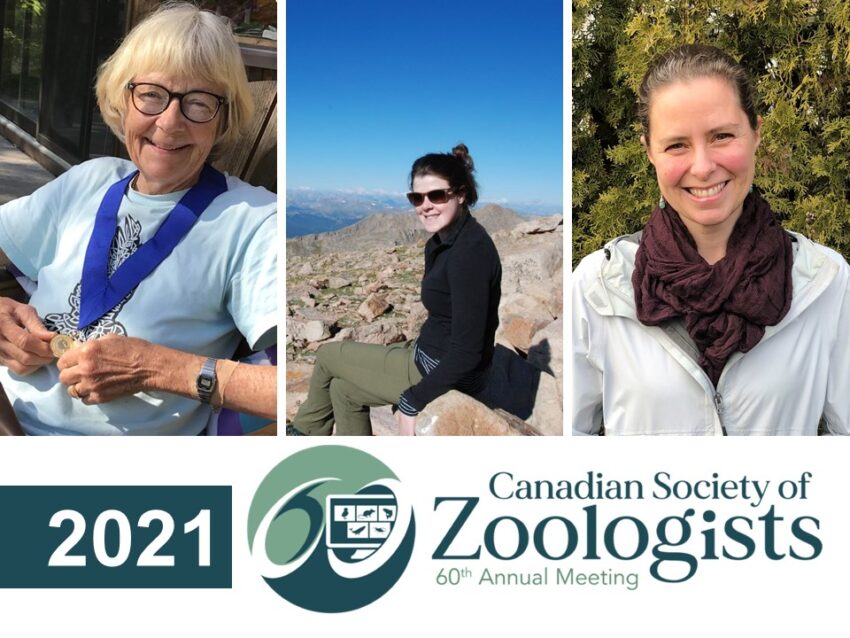
By Brittney G. Borowiec, CSZ-SCZ Blog Managing Editor & PDF, Wilfrid Laurier University
One of the best parts of the CSZ-SCZ annual meetings is attending the “big three” plenary seminars, where some of the leading scientists in our society talk about their work and their personal journeys. The Blog connected (virtually!) with the 2021 awardees to chat about their research and experience in CSZ. We also challenged them to pick one – just one – favourite animal!
Dr. Helga Guderley, 2021 Fry Award
The F. E. J. Fry Medal is given to a Canadian Zoologist who has made an outstanding contribution to knowledge and understanding of an area in zoology. The 2021 medallist is Dr. Helga Guderley from Université Laval.
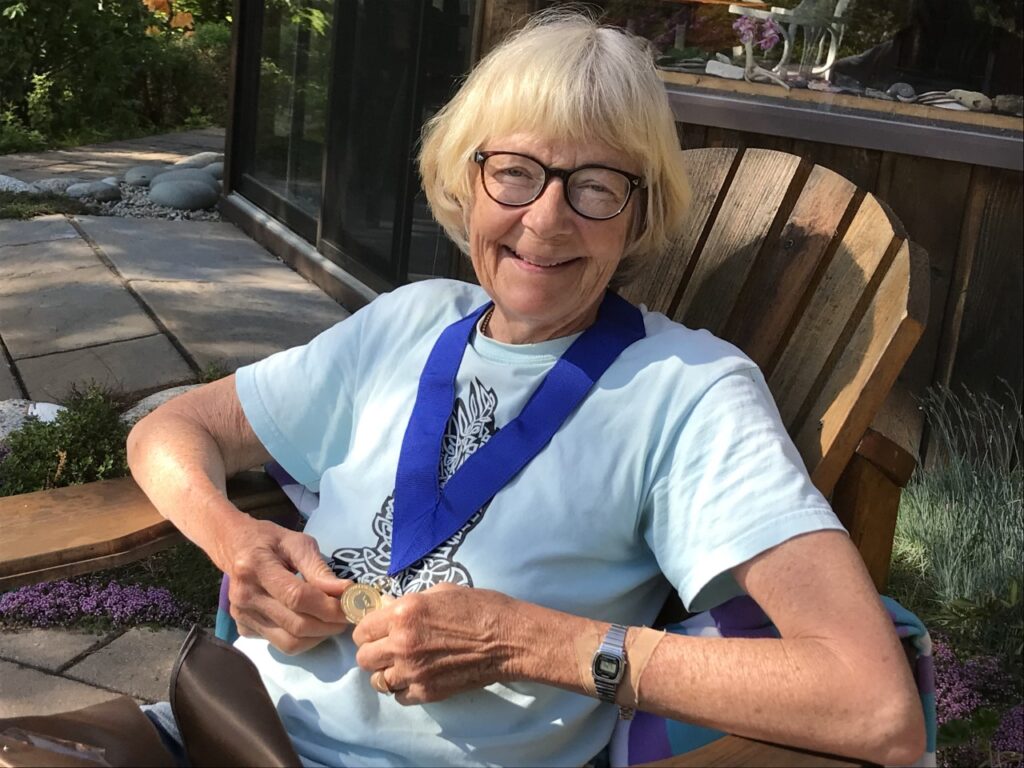
CSZ-SCZ Blog: What is your research about?
HG: My research was in the area of physiological and biochemical evolution, so evolutionary physiology. I studied how muscle capacities responded to biotic and abiotic factors and how those modifications impacted locomotory performance. My studies were both intra- and inter-specific. I worked with a huge range of animals, from sea urchins to sea birds, from mice to crabs and a great deal with scallops.
What’s your favourite part about CSZ? Do you have a story you’d like to share?
My favourite part of the CSZ is of course the people! I truly enjoy everyone from the early career researchers to the older folks like me. I thoroughly enjoy watching scientists evolve from enthusiastic first poster presenters to profs with their research programmes and even deans of science!
What advice would you like to give to early career researchers hoping to one day win the Fry medal?
My advice is to take advantage of opportunities that present themselves and to accept going off on a tangent (as long as you adjust back if the tangent gets too long). It’s hard to foresee all the possibilities that arise in a research lifetime. But the other thing is not to strive for winning an award as such, just work as best possible in your field, cultivating the friendships and collaborations that present themselves.
What’s your favourite animal and why?
My favourite animal depends on the day you ask me. I love scallops for their surprising swimming and their blue eyes. In my now retired position, I find birds particularly enjoyable, especially herons and ospreys. My favourite animal list [also] has to include loons and turtles, but … I have a wide list of favourites.
Since my research focused on cellular mechanisms, if I answered the question what my favourite part of the cell is, the answer would be mitochondria. They are so cool, and the major suite of adaptations needed for co-existence of mitochondria within cells is fascinating. Jealous landlords, providers of vital energy and determinants of host death, what a suite of characteristics for these often unsung organelles to possess!
Anything else you’d like us to know?
Back in the 1980’s, discussions of the place of women in science often came back to the important role that our parents play in our development. The phrase “I chose my parents well” is telling, it tells us that if we are parents, or in a role that can be similar to that of a parent, to act in ways to foster development, not to hinder it. It is not always easy, but crucial to the lives of your offspring be they biological or academic.
Dr. Erika Eliason, 2021 Boutilier Award
The Robert G. Boutilier New Investigator Award is awarded to a “rising star” in zoology, who has made significant contributions to the field within seven years of receiving their first academic or professional appointment. The 2021 awardee is Dr. Erika Eliason from University of California, Santa Barbara.
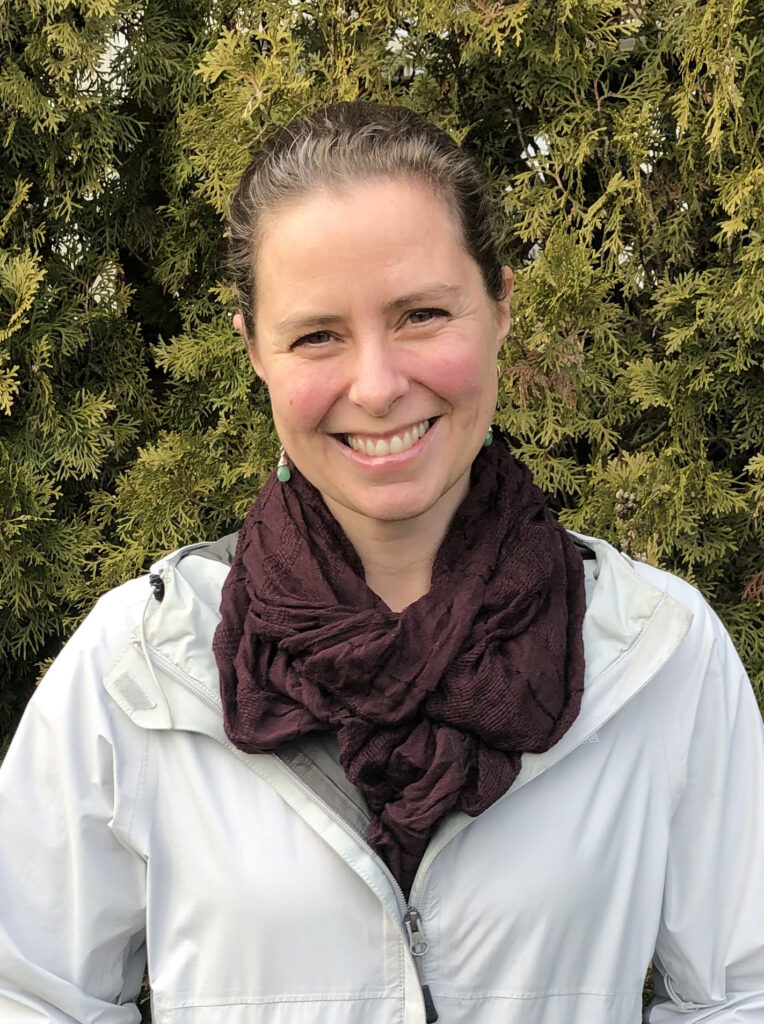
CSZ-SCZ Blog: What is your research about?
EE: I study intraspecific variability in performance and thermal tolerance in fishes.
What’s your favourite part about CSZ? Do you have a story you’d like to share?
I love that the CSZ is so welcoming and supportive, particularly to graduate students and early career scientists. I also appreciate the rigorous, high quality science. My very first CSZ meeting was in 2005 in Kingston, when I was a Master’s student. I had the most gruesome, horrific, swollen black eye you can imagine. It was truly stunning. Tony Farrell (my supervisor) didn’t even want me to fly, he was worried my eye would swell up even worse (it did). I gave my first ever oral presentation, and met the Boutilier Award winner for that year, Martin Grosell, who was a science hero of mine (I was studying digestion and really interested in learning some of Martin’s techniques). It was quite the experience and certainly one way to make a first impression!
What advice would you like to give to early career researchers hoping to one day win the Boutilier award?
First off, pursue questions that fascinate you. If you are asking questions that light you on fire and spark joy, then you can get through the inevitable challenges, drudgery, and outright catastrophes. Second, find mentors, role models, and champions. I greatly benefitted from having Tony Farrell as my graduate school supervisor to demonstrate to me what it is to be an exceptional scientist, and to afford me every opportunity to succeed. I also am so grateful for my postdoc advisors (Frank Seebacher, Steve Cooke, Scott Hinch) who supported me through a series of pregnancies and maternity leaves. These folks gave me a lot of freedom, opportunities, and accommodations to make my situation work. They also continue to champion my career and nominate me for awards (such as this Boutilier Award!). Third, never stop writing. I’m always working on manuscripts, editing student’s work, drafting book chapters, etc. to keep my publication record on track.
What’s your favourite animal and why?
Well, that’s easy. Sockeye salmon are the bee’s knees. I think I imprinted on salmon as a small child, fishing with my grandpa. But really, I am fascinated by the diversity of salmon.
Dr. Cayleih Robertson, 2021 Cameron Award
The T. W. M. Cameron Outstanding Ph.D. Thesis Award recognizes the author of an outstanding PhD thesis in zoology submitted to a Canadian University. The 2021 awardee is Dr. Cayleih Robertson, who both completed her PhD and is a postdoc at McMaster University.
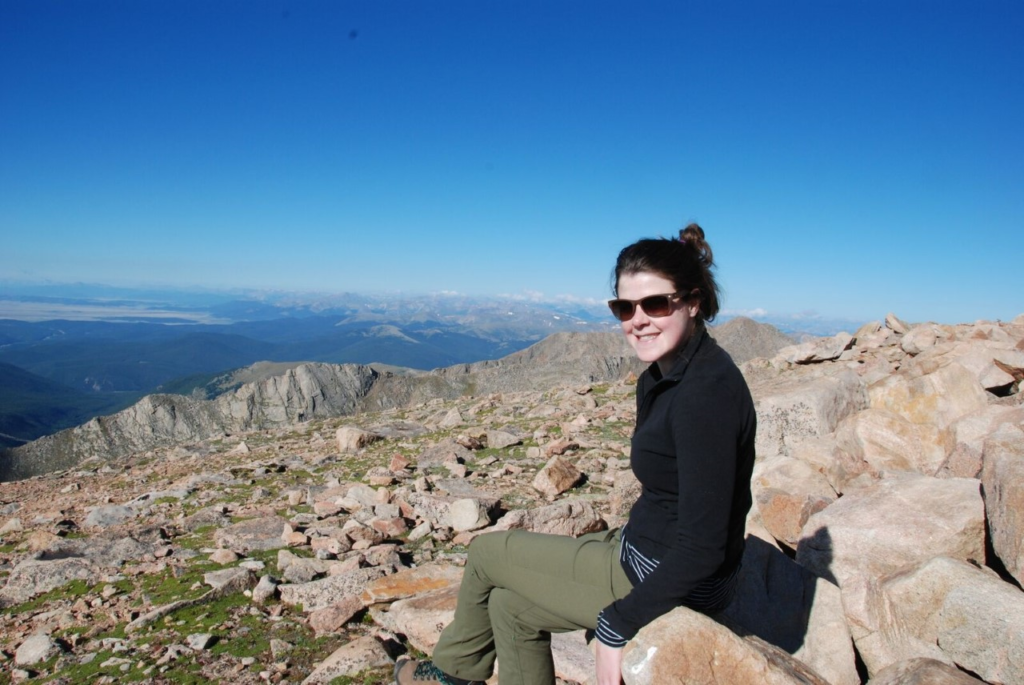
CSZ-SCZ Blog: What is your research about?
CR: I’m interested in understanding how young animals (and their moms) survive to adulthood in extreme environments. Specifically, in my PhD I studied the maturation of metabolically expensive tissues like brown fat and muscle in mice adapted to high altitude. High altitude is a really stressful place to live, its cold year-round and there isn’t much oxygen available to power aerobic activities like thermogenesis. Young animals don’t have the same physiological tools in their toolbox as adults do, so they need to come up with unique ways to cope with stressful environments. I think that it is really important to understand the physiology of young animals since so few of them actually survive to adulthood in the wild. These early strategies become really important to overall fitness. It doesn’t matter how awesome of an adult you could be if you never make it to adulthood in the first place.
What’s your favourite part about CSZ? Do you have a story you’d like to share?
I have always felt very welcomed and supported by the CSZ community! My very first CSZ conference was in Vancouver. I hopped on a plane from NB to BC the same day that I graduated from undergrad. It was so exciting for me at the time to meet people who were passionate about their science (and nice too). I was just a little undergrad but all of these scientists were treating me like a colleague. I met my future MSc supervisors at that meeting and met my future PhD supervisor at another CSZ several years later. I actually took a break from research between degrees, but I ended up attending the Montreal meeting after being away from academia for a while. I realized how much I missed it was the final push I needed to do a PhD.
What advice would you like to give to grad students hoping to one day win the Cameron award?
My advice would be to try not to get bogged down comparing yourself and your progress to others. It’s so easy to feel like you are falling behind your peers, but everyone’s project and scientific journey is different. I certainly fell into that trap many times during my grad studies, and it isn’t helpful. Also, it is OK to take breaks or switch directions if things aren’t working. Just run your own race.
What’s your favourite animal and why?
How could I possibly choose?
Anything else you’d like us to know?
I would encourage any grad student to throw their hat in the ring for a student councillor position. Being on council is a great opportunity to contribute to the society, see how it works and meet people outside of your section. Also, apply for those research travel awards!!!
Congratulations to all our “big three” award winners! We can’t wait to see where your research takes you next.