
By: Alyssa Weinrauch, CSZ-SCZ Blog Editor & PDF, University of Manitoba
The Canadian Society of Zoologists annual meeting always features an abundance of excellent talks spanning all areas of zoology. In particular, the “Big 3” plenary seminars are guaranteed to showcase some significant contributions by CSZ members at various stages in their career: tenured faculty, new investigator, or recent PhD graduate. CSZ-SCZ Blog reached out to the 2023 awardees to highlight their research and to chat about what recognition from the society means to them.
Dr. Kathleen Gilmour, 2023 F.E.J Fry Medal
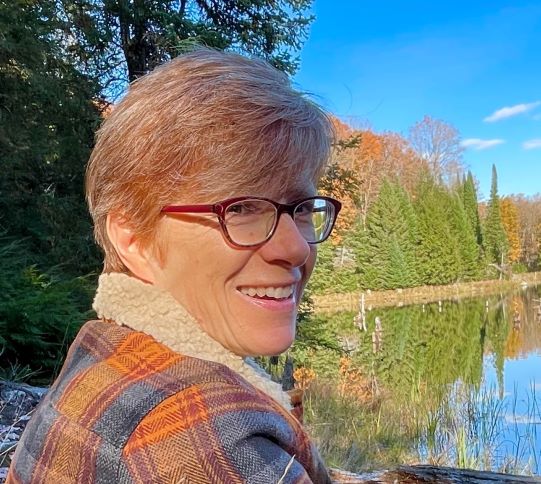
The F. E. J. Fry Medal is given to a Canadian Zoologist who has made an outstanding contribution to knowledge and understanding of an area in zoology. The 2023 awardee is Katie Gilmour from the Department of Biology, University of Ottawa.
CSZ-SCZ Blog: Can you tell us a little about your research?
KG: I am a comparative physiologist who works on fish. My current research explores two themes. First, I aim to understand the mechanisms through which fish maintain gas exchange and ion- and acid-base balance in diverse environments. Work in this area focuses on mechanisms of gas sensing and ion transport, particularly with respect to the enzyme carbonic anhydrase, which plays key roles in both gas transfer and acid-base balance in a variety of tissues.
My second interest is stress physiology. We use the formation of dominance hierarchies and the resultant social stress as a means of studying chronic stress in fish. Questions of interest focus on how the stress axis functions during acute versus chronic stress, as well as the physiological consequences of chronic stress on metabolism, growth, and tolerance of environmental challenges such as elevated temperature.
CSZ-SCZ Blog: What does winning this award/the CSZ in general mean to you and/or your career?
KG: Over the years, I have enjoyed many Fry lectures at CSZ meetings, so it is a huge honour (and kind of surreal) to get one myself.
CSZ-SCZ Blog: What has been a driving factor for your scientific passion/research pursuits?
KG: I’m fascinated by how animals work, and I really like fish. Throw in curiosity about how animals cope with environmental challenges, and comparative physiology with fish as the study animal is a perfect fit.
CSZ-SCZ Blog: Do you have any tips for researchers just beginning their academic career?
KG: I think that following your interests (as much as possible) is really important – there can be a lot of “adversity days” in research, and these are easier to manage when you are working on something that fascinates you.
The other key ingredient, at least to me, is the community around you – mentors, peers, trainees. They share your enthusiasm, provide support and opportunities, offer constructive criticism, contribute to your successes, commiserate when things don’t go well, and generally make life in research very worthwhile!
CSZ-SCZ Blog: What’s something you like to do outside of research? KG: Hiking, skating, cross-country skiing and fishing – basically, spending time outside in the natural environment!
Dr. Kenneth Jeffries, 2023 Robert G. Boutilier New Investigator Award
The Robert G. Boutilier New Investigator Award is awarded to a “rising star” in zoology, who has made significant contributions to the field within seven years of receiving their first academic or professional appointment. The 2023 awardee is Ken Jeffries from the Department of Biological Sciences, University of Manitoba.

CSZ-SCZ Blog: Can you tell us a little about your research?
KJ: My lab uses transcriptional profiling to understand the effects of pollution or climate change-related stressors on aquatic ectotherms. We do this by either using high-throughout qPCR or RNA-sequencing. This is typically on fishes of conservation concern or of economic importance; however, we have also begun studying bivalves in the Arctic.
The central goal of the research is to understand whether populations will be able to cope with certain stressors in the future and to determine which populations may be in trouble. We try to integrate the transcriptome signature with physiological processes across different levels of biological organization to gain a more comprehensive understanding of the effects of the stressors on the animals.
In recent years, we have also started some population genomics studies to help understand genetic structure of species of conservation concern. We have also been developing multi-species ultra high-throughput qPCR chips through the Genome Canada funded GEN-FISH project (Genomic Network for Fish Identification, Stress and Health) to be able to assess the physiological status of wild fishes in Canada.
CSZ-SCZ Blog: What does winning this award/the CSZ in general mean to you and/or your career?
KJ: The CSZ has just been such a welcoming society for me. When I first attended during my MSc, I was working in ecotoxicology in a limnology lab, so I wasn’t familiar with the conference or the society. But that was the first conference I had been to where the professors were interested in talking and hanging out with the students. I just liked how welcoming it was, and I have kept coming to the meeting since.
Now it is like a reunion and it’s exciting to see friends again every year. It’s something I get excited for every year. It is fun to bring students to the meeting now to show off the cool work they are doing and introduce them to the society as well. To me, it is a huge honour to receive this recognition from the society given how important the CSZ has been throughout my career. I was thrilled for the opportunity to present at the conference in Saskatoon and show folks what we have been up to in my lab and hopefully highlight some of the great work that folks in my lab have been doing since I started at the University of Manitoba in 2016.
CSZ-SCZ Blog: What has been a driving factor for your scientific passion/research pursuits?
KJ: Honestly, I’m just genuinely fascinated by animals and nature. It just amazes me how wonderfully complex animal biology can be, and it blows my mind how evolution has led to some of the ways species can do incredible things. And there is so much going on at the cellular level to allow normal functioning in animals. It’s pretty cool, and that’s what keeps me excited about research. From a more practical level, I think it is important for scientists to be able to produce the data to show how climate change and pollution can impact wild species to hopefully have that information be used to contribute to management decisions. That is always the hope of course.
CSZ-SCZ Blog: Do you have any tips for researchers just beginning their academic career?
KJ: My advice to people beginning their career is to really love your research topic. Science can be hard sometimes and you will be emersed in the topic; if you don’t love it, it will be tough. For students starting out, I would recommend putting in the effort to become proficient at coding, statistics, and scientific writing. Not everyone likes these aspects of the scientific process, but they are fundamental skills that are useful throughout your entire career and are transferable to any field. Effort in those areas really pays off in the long run.
CSZ-SCZ Blog: What’s something you like to do outside of research?
KJ: I mostly play as much hockey as possible and play guitar while away from research. I also spend way too much time walking my dog and telling him to stop eating things. And since moving to Winnipeg, shoveling snow and cursing at road construction have become real passions of mine.
Dr. Jacqueline Lebenzon, 2023 T.W.M. Cameron Outstanding PhD Thesis Award
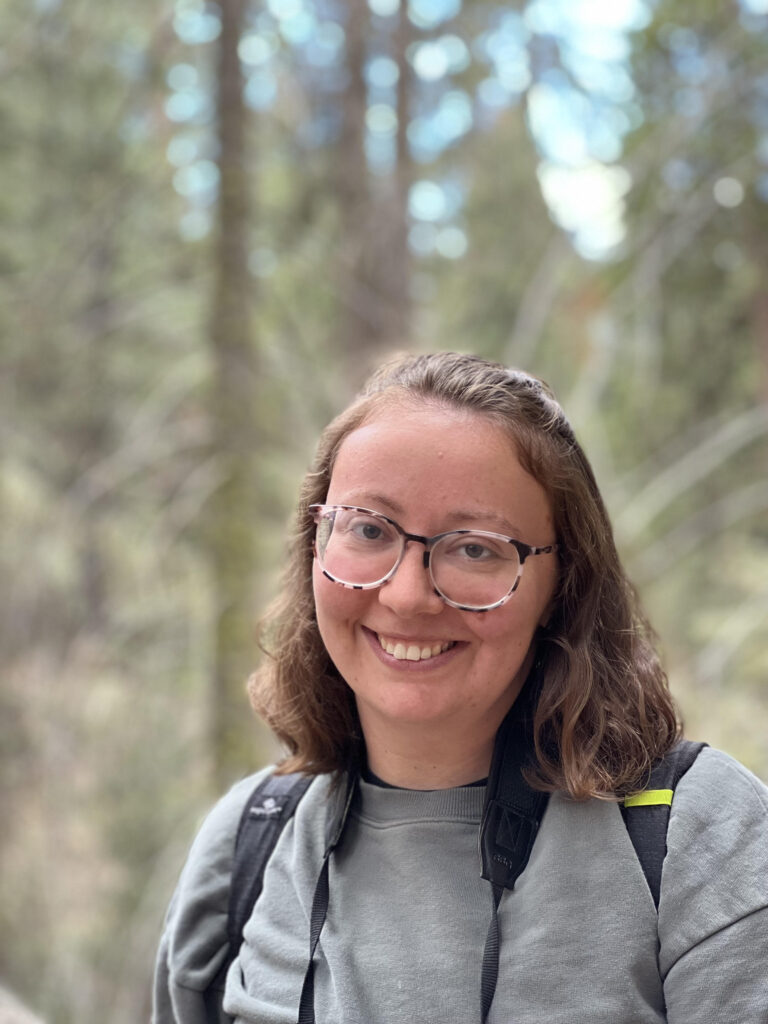
The T. W. M. Cameron Outstanding Ph.D. Thesis Award recognizes the author of an outstanding PhD thesis in zoology submitted to a Canadian University. The 2023 awardee is Jackie Lebenzon, who completed her PhD at Western University and is now a postdoc at the Department of Integrative Biology, University of California Berkeley.
CSZ-SCZ Blog: Can you tell us a little about your research?
JL: I am an insect physiologist and study how insects survive environmental and energetic challenges. I am really interested in how insects are able to fine tune sub-cellular processes both in response to and in anticipation of environmental stress, and how this can ultimately improve their performance at the cellular, tissue, and organismal level!
I think winter is a really *cool* (no pun intended) system for understanding how insects deal with environmental challenges because during winter they have to (i) survive months without access to any food in a state of energetic stress and (ii) deal with below freezing temperatures! Even though tiny ectothermic insects are super vulnerable to these types of winter stressors, they have evolved unique strategies to overcome them and can give us some really neat insights into physiological adaptation.
CSZ-SCZ Blog: What does winning this award/the CSZ in general mean to you and/or your career?
JL: I’ve been a CSZ member and have been attending meetings regularly since 2015. Over these past eight years I have been lucky to see many peers become close friends, and senior PDFs and faculty consistently encourage me and support my research. Because of this I feel like I have sort of grown up as a person and a scientist in this wonderful community and so winning the Cameron award means a great deal to me on both a personal and professional level. I’m super grateful I had the platform to showcase my research in Saskatoon!
CSZ-SCZ Blog: What has been a driving factor for your scientific passion/research pursuits?
JL: I grew up loving animals (as most of us do!) but it wasn’t until my undergrad that I realized I could turn my love for weird/cool animals into a research career. Once I started doing research, I found I was driven by that awesome feeling you get when you finish an experiment and discover something novel that nobody else has seen or done (even if the results don’t support your hypothesis, it’s still new!). I think also having incredibly supportive mentors and colleagues has helped motivate me in my research pursuits. Having someone to cheer me on through the ups (and inevitable downs) of research is really what keeps me going.
CSZ-SCZ Blog: Do you have any tips for researchers just beginning their academic career?
JL: I think my first tip would be to always come to CSZ! If I haven’t gushed enough, I think that the CSZ community is the most welcoming and encouraging environment for early career researchers and a great place to give a first talk or poster presentation. On that same note, I think that research is only as impactful as the way it’s communicated, so getting opportunities to present and craft your story (early and often!) is the best way to produce great science, write great papers, and make an impact in your field.
I also think it’s extremely important to seek work/life balance early on in your career and find a pace of work that is sustainable. Sometimes that is easier said than done but setting boundaries for yourself early on can lead to habits that help you keep that balance. I decided early on in grad school that weeknight pub trivia and lazy Sundays were what I needed to get by, and to this day are unmovable events in my google calendar.
CSZ-SCZ Blog: What’s something you like to do outside of research?
JL: I love baking and cooking, playing board games and exploring local coffee shops and breweries (the beer does not disappoint in California).
Congratulations to all our “big three” award winners! We can’t wait to see where your research takes you next.